
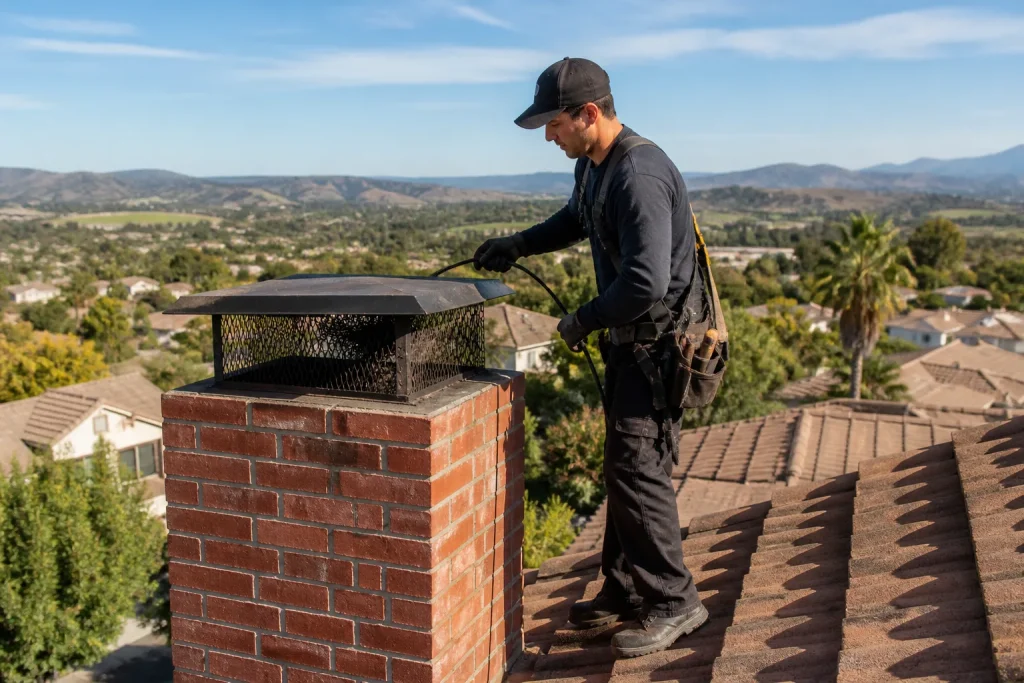
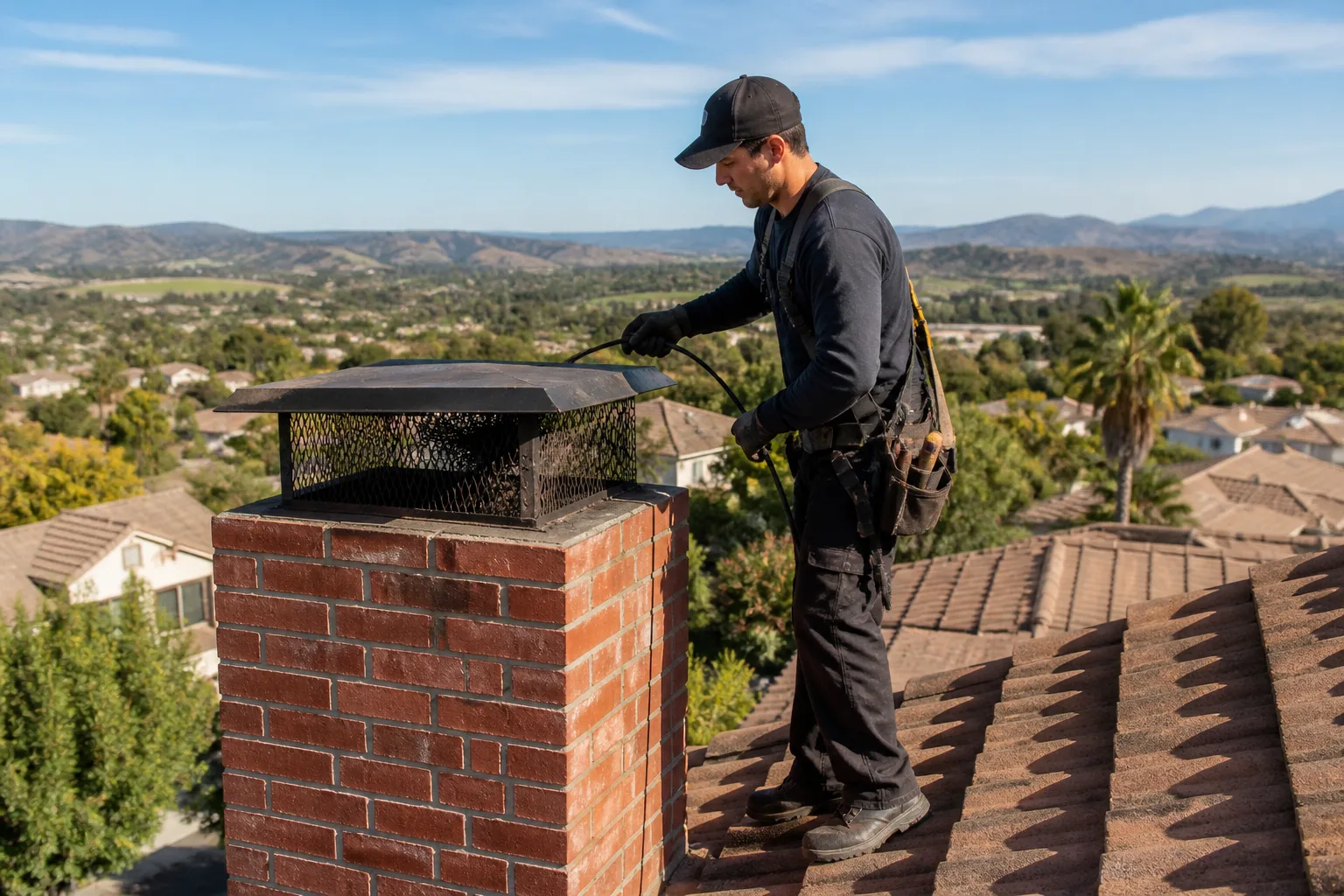
Emergency Chimney Sweep Near Me: What Laguna Hills Homeowners Should Do First
During a chimney flue fire, calling a sweep is the third thing you should do, not the first. The two steps before that call decide whether the fire stays inside the flue or finds its way into your framing. Most homeowners reach for the phone the moment they see smoke or flames, and we understand why. But a rushed call before you’ve shut the fire down properly can cost you the minutes that matter most. Here’s the sequence we want every Laguna Hills homeowner to know before they ever need it.
If you’d rather not work through any of this yourself, that’s a reasonable choice. Call (855) 726-8035 and we’ll walk you through it.
What should you do in the first five minutes of a chimney fire?
Shut the fire down, get everyone out, then call. In that order. A chimney fire feeds on oxygen and fuel, so cutting both is the fastest way to stop it from climbing into the structure above the firebox.
- Close the glass doors or firebox door. If you have a fireplace with doors, shut them. This starves the fire of the room air it’s pulling.
- Close the damper, but only if you can do it safely. If flames are visible at the top of the firebox or the damper handle is too hot to touch, leave it. A damper that’s already too hot to handle means you should move to the next step immediately.
- Get everyone outside. Smoke from a flue fire carries carbon monoxide and fine particulates. Don’t stand in the room watching it.
- Call 911 if you see flames or heavy smoke coming from the chimney top, hear a roaring sound like a train, or smell smoke in rooms that shouldn’t have any. Those are signs the fire has moved beyond the flue.
- Call a sweep once the fire is out and the fire department has cleared the house. The flue needs to be inspected before you light another fire, period.
One more thing: don’t throw water on a chimney fire from inside the firebox. The thermal shock can crack a clay tile liner, and a cracked liner is a much bigger problem than the fire you were trying to put out.
Is smoke rolling back into the room a blockage emergency or a draft problem?
Smoke rollback is only a true emergency when the flue is blocked. If smoke pours back into the room the moment you light a fire, and it happens every single time, you likely have a nest, a debris pile, or a collapsed liner section blocking the flue. That’s urgent. Stop using the fireplace and get it looked at before you light another fire.
If the smoke comes and goes, here’s what we tell Laguna Hills homeowners to check first:
- Is the damper actually open? We know. It sounds obvious. It’s the most common cause of a smoky room we see.
- Is the house running negative pressure? Bathroom fans, kitchen exhaust hoods, and clothes dryers all pull air out of a house. A tight modern home with a strong exhaust fan running can reverse the draft and push smoke down the flue.
- Is it windy outside? A downdraft from a gust can push smoke back into the room. If it only happens on gusty days, that’s a draft and cap issue, not a blockage.
- Is the wood wet? Green or damp wood smolders and produces more smoke than the flue can carry away. It’s a fire hazard and it’s the cheapest thing to fix.
Blockage rollback is urgent but rarely a 911 call. Draft rollback is annoying and fixable. Neither one means you should keep burning while you figure it out.
What should you tell the dispatcher when you call?
The more specific you are on the phone, the better equipped the technician arrives. A sweep who shows up expecting a routine cleaning and finds a blocked flue needs to turn around for a camera and liner tools. That’s a wasted trip and a wasted afternoon for you.
Tell them:
- What happened. Smoke in the room, a flue fire, a missing cap after wind, or something else. “My fireplace is smoking” and “my chimney caught fire last night” are two very different calls.
- What you’ve already done. Fire out, damper closed, fire department on scene or not.
- What kind of flue you have, if you know. Masonry with clay tile, or a factory-built metal system. If you don’t know, say so; that’s normal.
- Whether anything changed recently. A new roof, a windstorm, a cap that’s been rattling, a fire that’s been burning weak. Recent changes narrow down the cause fast.
- Whether you smell smoke in the house right now. That changes the conversation entirely.
Mention if you’ve had work done before, and who did it. If a clay flue has already been resurfaced, a technician needs to know that before reaching for a brush and scraper. HeatShield resurfacing is common in older Laguna Hills homes with clay tile liners, and running a rotary brush through it without knowing is how good work gets undone. We show you what we find, and the camera report is what tells us which tools to bring.
Why should Laguna Hills homeowners check for wind debris after Santa Ana wind events?
Santa Ana winds are the reason a chimney that worked fine two weeks ago suddenly back-puffs smoke. Those dry gusts run down the canyons and over the hills, and they don’t just shake the trees. They carry debris with them.
After a strong Santa Ana event, do a quick visual check from the ground before you light a fire:
- Look at the chimney cap. A missing or bent cap lets birds, leaves, and palm debris straight into the flue. Gelco caps handle draft and weather exclusion the way the manufacturer engineered them to; a cap knocked loose needs to be replaced, not wired back into place.
- Look at the crown. Cracks in the concrete crown at the top of the chimney let water in, and water plus the next round of wind equals a failing crown. Famco crown components exist for exactly this repair.
- Check what’s sitting on the cap screen. Fine debris from dry Santa Ana gusts piles up against screens. A partially blocked screen is a slow-moving blockage waiting to become a smoky living room.
- Look at nearby trees. If a tree limb reaches over the chimney, a windy week means it deposited what it was holding.
In our experience across Laguna Hills, a chimney that suddenly smokes after a wind event almost always has something sitting in the flue or on the cap. Sometimes both. An experienced chimney sweep can clear it and inspect the liner in the same visit. Our technicians have up to 15 years of experience, and the ones who do this work know exactly what a post-Santa Ana flue looks like.
What does a legitimate emergency response look like?
A legitimate chimney emergency response involves a diagnostic visit, not a rushed confirmation of what you already told them. Here’s the honest difference:
A rushed visit clears whatever’s blocking the flue, tells you it’s fixed, and leaves without looking further. The fire burns again the next cold night, the smoke comes back, and you’re calling someone else. Or the sweep tells you the whole chimney needs a new liner before they’ve run a single camera through it. We’ve heard that one more times than we can count.
A proper response looks like this:
- A technician who asks what happened before touching the chimney
- A camera inspection of the entire flue, from the firebox to the top of the chimney
- A photo report you see for yourself, on the spot
- A repair recommendation tied directly to what the camera shows, with the reasoning explained
- An honest verdict on what can safely wait
That last one is the part most homeowners don’t hear. Sometimes a chimney needs a DuraFlex flexible liner because the original clay tile is shifted and no rigid liner will seat correctly. Sometimes it needs a crown, a cap, and nothing more. Sometimes a technician runs a camera, finds only minor glazing, and tells you to sweep it and call it a year. If that’s the answer, it’s the right answer. Built to last, not patched to pass. If nobody’s shown you the inside of your flue, you have no way to know which one you’re getting.
When to call a pro
If your fire department has been out, if a fire flue has burned, or if a camera hasn’t been in your flue since the last wind event, call a technician before you light another fire. Creosote buildup inside the flue is what fuels a chimney fire in the first place, and the only way to know how much is there is to look. Sweeping is what clears it. Smoke in the living room is not a problem to live with until spring.
Related services in Laguna Hills: a standard chimney sweep handles routine creosote, while fireplace repair covers damage to the firebox, doors, and damper. If the camera shows structural issues, chimney repair covers crown, cap, and masonry work.
The Bottom Line
In a chimney emergency, the order of your actions matters more than how fast the technician drives. Shut the fire down. Get people out. Call 911 if flames or heavy smoke are outside the flue. Then call a sweep. Tell the dispatcher what happened and what you’ve already done, and expect a camera inspection before anyone recommends a single repair.
We answer 24/7. Call (855) 726-8035 and we’ll set up a diagnostic visit. Fast dispatch from 7am to 7pm, Sunday through Friday. A call outside dispatch hours is booked into the next opening. We’re closed on Saturday.
Chimney Sweep Laguna Hills offers free estimates for Chimney Sweep Laguna Hills homeowners and works with the professional trade brands specified for this work: DuraFlex, HeatShield, Gelco, Olympia Chimney, Famco, and Copperfield. One call covers the full chimney system, from the sweep and inspection to the cap and crown and any structural repair that follows. If you’re in Laguna Hills and need help, Chimney Sweep Laguna Hills offers free estimates for all five services – chimney sweep, fireplace repair, chimney repair, inspection, and cap and crown installation – and the written estimate sets the final price.
Frequently Asked Questions
Pricing is set per job by a free written estimate, not by a standard emergency rate. Call (855) 726-8035 for an exact quote – estimates are free.
Not always. A chimney fire damages a liner in direct proportion to how hot and how long it burned, and the only way to know is a camera inspection of the full flue. Many flues survive with a sweep and a resurfacing rather than full relining. HeatShield resurfacing restores a clay liner that’s still structurally sound; DuraFlex flexible liners handle flues that are too irregular for a rigid replacement. Either way, no one should recommend a new liner until you’ve seen the inside of your flue with your own eyes. Call (855) 726-8035 to book that inspection – estimates are free.
The standard is once a year for homes that burn regularly, and more often if you’re burning green wood or your flue accumulates creosote quickly. The inspection matters as much as the sweep, because a slow buildup and a small crack in the liner look fine from the living room. Call (855) 726-8035 for an inspection – estimates are free.
Creosote builds up with every fire, and the more it builds, the more fuel is sitting inside your flue waiting for a spark. The risk is a chimney fire, which is far more serious than a smoky evening. A camera inspection and a sweep keep that risk on the right side of the line, and if the answer is “you’re fine for another year,” we’ll tell you that too. Call (855) 726-8035 – estimates are free.
Written by the team at Chimney Sweep Laguna Hills.
Need Chimney Cleaning Help?
Call Chimney Sweep Laguna Hills - the local pro we connect you with is licensed and insured, with free written estimates in Laguna Hills.
(855) 726-8035