
Gelco Chimney Sweep in Laguna Hills: A Homeowner’s Guide
Gelco is a manufacturer of chimney components, not a chimney service company. If you searched “Gelco chimney sweep,” what you actually want is a technician who stocks and installs Gelco-made caps, dampers, and chase covers, not a brand that sends out crews. It’s an easy mix-up, and it costs homeowners time and sometimes money. This guide maps what Gelco builds to the real chimney problems in Laguna Hills homes, so you know exactly what a qualified technician brings to the visit.
If you’d rather not sort through the parts catalog yourself, call (855) 726-8035 for a free estimate and we’ll take it from there.
What does Gelco actually manufacture?
Gelco makes chimney components: caps, top-sealing dampers, and chase covers. That’s the whole answer. The company does not sweep chimneys, inspect flues, or send technicians to your door. When you see “Gelco” on a product, you’re looking at a hardware component engineered for a specific job, usually weather exclusion and draft control at the top of the system.
This distinction matters because it tells you what a good technician should be able to explain. A sweep who knows Gelco products can tell you which cap or chase cover fits your flue opening, how the damper mounts, and what size you need. A sweep who doesn’t will improvise, and improvisation at the top of a chimney means gaps that let water in or a cap that rattles loose in the first Santa Ana wind.
In our experience across Laguna Hills, the three Gelco components that come up most are:
- Chimney caps – the lid plus spark screen that keeps rain, birds, and debris out of the flue.
- Top-sealing dampers – a gasketed damper at the chimney crown that seals the flue shut when the fireplace isn’t burning, which controls heat loss better than a throat damper.
- Chase covers – the metal lid over a wood-framed chase, common on the prefab fireplaces that show up throughout Laguna Hills.
Each one is a spec-driven part. Get the size or material wrong and it underperforms quietly for years.
Which Gelco products matter most for Laguna Hills fireplaces?
Laguna Hills homes lean hard on two fireplace styles: stucco-clad masonry chimneys and prefabricated fireplaces set inside a framed chase. Both need the same thing on top, which is a lid that fits and seals, but the Gelco product that solves each one is different.
For stucco chases, a proper chase cover is the priority. Stucco chimneys in this climate take a long, slow beating from sun and the occasional hard rain, and a loose or rusted cover lets water track down into the framing. A Gelco chase cover sized to the chase dimensions, with the right pitch, moves water off instead of letting it pool. That’s the difference between a cover that lasts and one that’s rusting at the seams within a couple of seasons.
For prefab fireplaces, a top-sealing damper is often the upgrade worth considering. These fireplaces usually ship with a throat damper that leaks air even when closed. A top-sealing Gelco damper closes at the crown, where the seal actually holds. In a mild-winter climate like ours, where you’re running the fireplace on cool evenings rather than fighting a hard freeze, that tighter seal keeps the house from leaking conditioned air straight up the flue.
We work with Gelco alongside Olympia Chimney and Copperfield components, and the honest answer on which product fits is always: it depends on the flue. That’s the conversation a qualified technician should be having with you, not reciting a catalog.
How does a technician decide which Gelco component fits your flue?
Fit comes down to measurement and inspection, not guesswork. A technician evaluating a Gelco component for your chimney works through a short checklist before recommending anything:
- Measure the flue opening. Cap and damper sizing starts with the inside dimensions of the flue or chase. Too small a cap chokes draft; too large sits loose.
- Inspect the crown and top course. A cap sits on a surface. If the crown is cracked or crumbling, no cap will seal properly until the crown is addressed.
- Check the chase material and framing. Stucco, brick, and wood-framed chases each call for different cover attachment and sealing.
- Assess the flue interior with a camera. Damper selection and any relining decision depend on what the flue looks like inside, not what the top looks like.
- Confirm the fireplace type. Factory-built fireplaces have manufacturer limits on what you can add. The right component is one that respects those limits.
Notice that step four is a camera inspection. Without it, a technician is guessing about the flue condition and recommending parts on hope. We show you what we find, which is also why we can tell you plainly when a perfectly good cap is already doing its job and needs nothing.
What does installing a Gelco cap or chase cover actually involve?
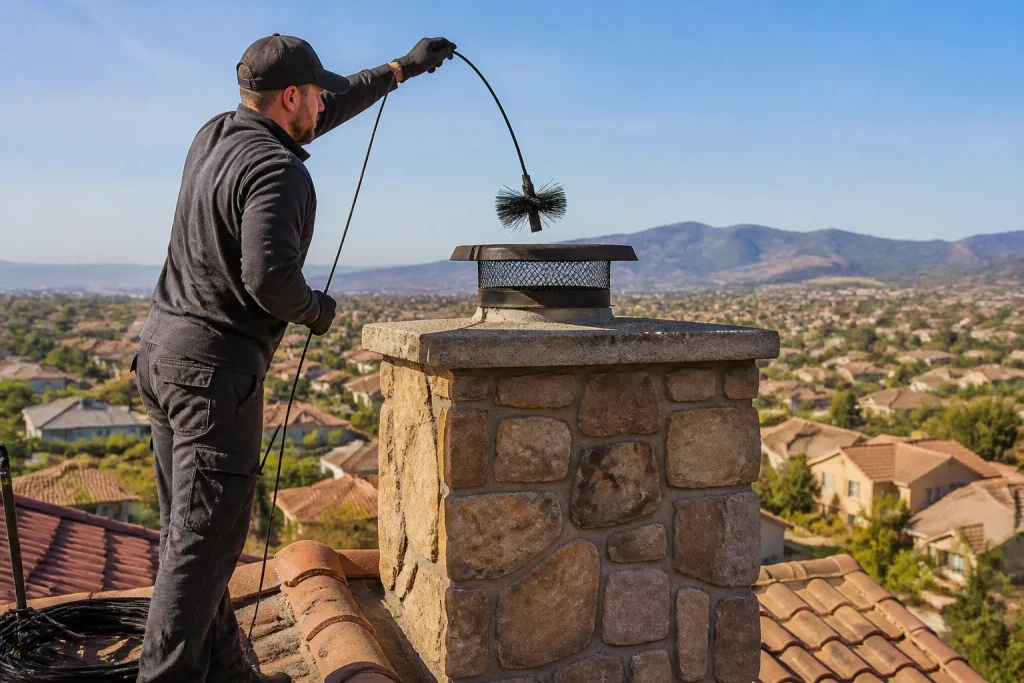
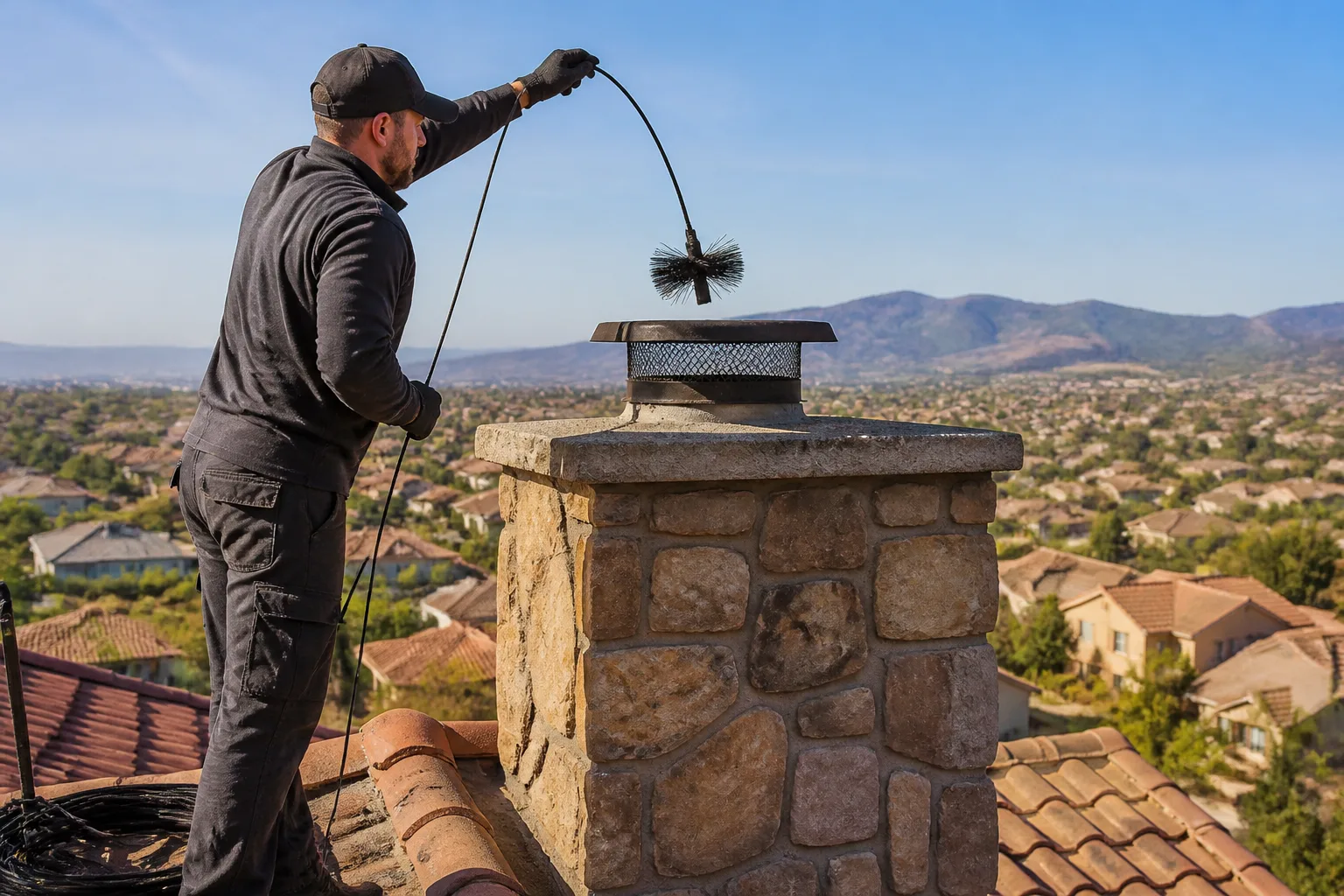
Installing a Gelco cap or chase cover is a top-of-chimney job done from a ladder or roof, and it’s a safety-sensitive one. It involves removing the old cover or cap, checking the crown and flue tile for cracks, setting the new component to the correct dimensions, and sealing the edges so water can’t get behind it. On a chase cover, the technician also verifies pitch and fastens through the cover into the chase framing with sealed fasteners.
The labor is modest, but the details are where installs fail. A cover sealed with the wrong caulk, or fastened without checking the framing behind it, works for a while and then doesn’t. We use professional-grade components from brands like Gelco, Olympia Chimney, and Famco because a hardware-store cover that fits “close enough” is how you end up back on the roof in two years. Built to last, not patched to pass.
One safety note we won’t skip: work at the top of a chimney involves height and a ladder, and the flue gases and creosote inside the system are a real hazard if disturbed carelessly. This is a job for a trained professional with the right equipment, not a weekend project. A technician also knows when the crown underneath needs repair first, and that’s the kind of call that separates a good install from a cover that leaks anyway.
If a technician finds the crown cracked or the flue in poor shape while they’re up there, the honest next step may be chimney repair before any new cap goes on.
What are the red flags that a sweep doesn’t know Gelco specs?
A sweep unfamiliar with Gelco will usually show it before the visit ends. The pattern is consistent, and once you know the signs you’ll spot them quickly:
- They can’t name the product. A qualified technician can tell you which Gelco or Famco component fits your flue and why. Vague answers about “a standard cap” are a warning.
- They recommend a one-size cover. Chimney caps and chase covers are sized to the flue and chase. Universal-fit parts are a shortcut, not a solution.
- No camera inspection. If the technician recommends a cap or damper without looking inside the flue, the recommendation is guesswork.
- They push a full reline when a smaller fix would do. The opposite problem of upselling: some sweeps skip the resurfacing option entirely. HeatShield resurfacing can sometimes extend the life of an existing liner instead of replacing it, so ask whether that’s on the table.
- They won’t tell you what to expect from the product. A Gelco cap, Olympia component, or Copperfield damper should come with clear expectations for the job. If nobody explains them, ask.
We install and service six professional chimney industry brands, and we’re HeatShield-certified for flue resurfacing. That range means we can match the right component to your flue instead of forcing one brand onto every chimney we see in Laguna Hills.
When should you call a professional?
Most Gelco component questions come up during a sweep or an inspection, rarely on their own. The moment to call a professional is when you notice a sign that the top of your chimney isn’t doing its job. Water stains on the ceiling near the chimney. A rusted or missing cap. Debris in the firebox. A damper that won’t seal. A draft that pulls smoke back into the room. Any of these means the system needs a look from someone who knows the difference between a real fix and a cosmetic one.
Routine maintenance matters here too. A chimney should be swept when creosote builds up, and annual inspection is the standard recommendation for a fireplace you actually use. Skipping it lets small problems, a cracked crown, a failing chase cover, a loose cap, turn into structural repairs. The stakes are real: chimney fires and carbon monoxide exposure are genuine hazards, and a proper inspection is how you catch the conditions that cause them before they do. We answer 24/7. Fast dispatch from 7am to 7pm.
Related services in Laguna Hills: a chimney sweep clears the creosote so the flue can be assessed honestly, and fireplace repair handles dampers, fireboxes, and the components around the fire.
The Bottom Line
Gelco makes chimney components, and the value of a Gelco part depends entirely on whether the technician installing it measured your flue and picked the right spec. A chimney cap, top-sealing damper, or chase cover that fits is one of the cheapest ways to protect a Laguna Hills chimney; one that doesn’t fit is a leak waiting to happen. When you’re hiring, ask what product the technician recommends, why it fits your flue, and what they saw on the camera. If you’re in Laguna Hills and need help, Chimney Sweep Laguna Hills offers free estimates. Call (855) 726-8035. We answer 24/7. Fast dispatch from 7am to 7pm, Sunday through Friday. One call covers the full chimney system, and nothing gets recommended without evidence you can see.
Frequently Asked Questions
No. Gelco manufactures chimney components like caps, top-sealing dampers, and chase covers. It does not send out crews or perform chimney sweeping. When you search for a Gelco chimney sweep in Laguna Hills, you’re really looking for a technician who stocks and installs Gelco parts. Call (855) 726-8035 for a free estimate from a team that works with Gelco and other professional trade brands.
You need one when the current cover is rusted, loose, or missing, or when water is getting into the chimney. A technician should confirm with a top-side inspection and a flue camera before recommending a replacement, and we’ll tell you plainly when a cover is still in good shape. Call (855) 726-8035 for an honest look at what your cap and chase cover actually need.
A throat damper sits above the firebox and a top-sealing damper closes at the crown, where the seal holds better and keeps air conditioning from leaking up the flue. Top-sealing dampers are often a worthwhile upgrade on prefab fireplaces. Whether it’s the right fit for your fireplace depends on the flue and manufacturer limits, so ask a technician to check. Call (855) 726-8035 for a free estimate.
It shouldn’t be. A cap or chase cover install should include a look at the crown, flue tile, and flue interior, because a cap over a cracked crown or damaged flue doesn’t protect anything. We show you what we find before recommending work. Call (855) 726-8035 to book a visit.
For the full scope of what we do in Laguna Hills, start at Chimney Sweep Laguna Hills.
Written by the team at Chimney Sweep Laguna Hills.
Need Chimney Cleaning Help?
Call Chimney Sweep Laguna Hills - the local pro we connect you with is licensed and insured, with free written estimates in Laguna Hills.
(855) 726-8035