
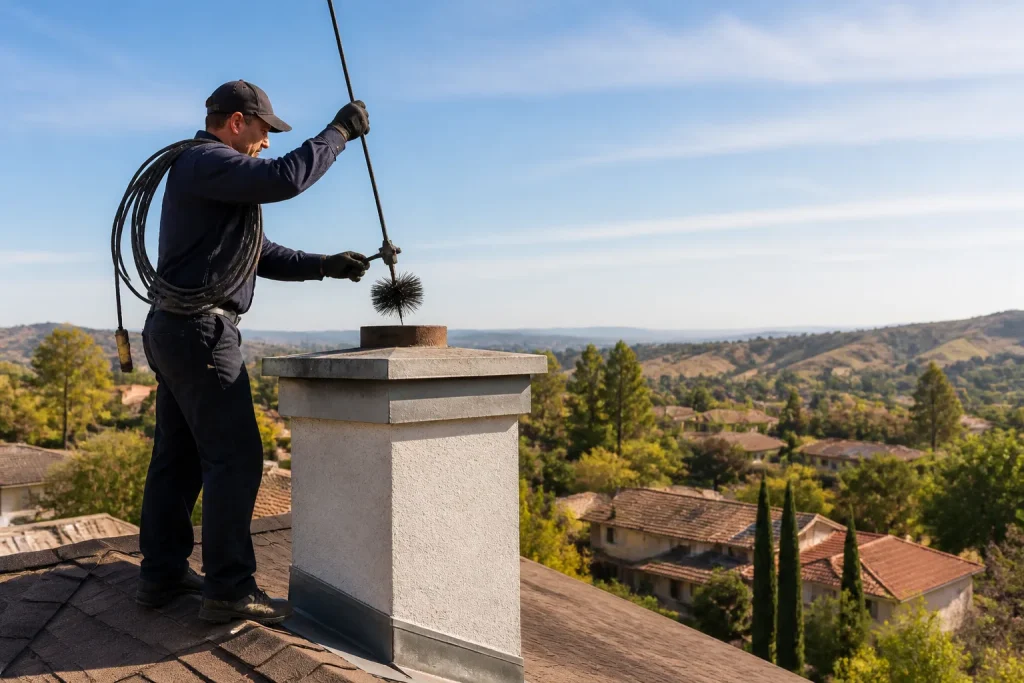
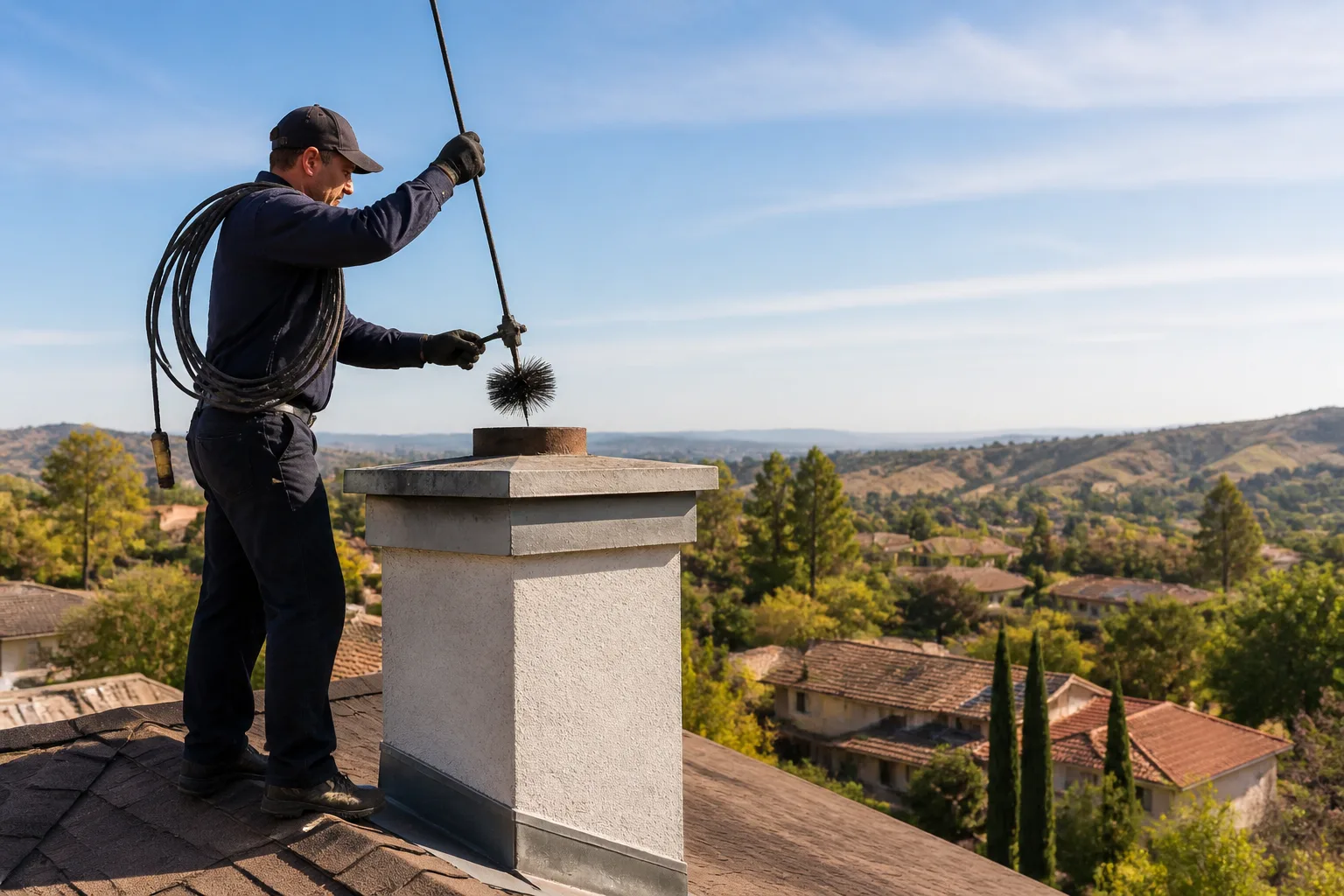
Top Signs You Need Chimney Cleaning Service – Don’t Ignore These
A white stain running down your chimney exterior isn’t a cosmetic issue. It’s efflorescence, and it means water is moving through your masonry and breaking down the mortar from the inside. By the time it shows on the outside, the inside is further along. Most chimney problems announce themselves long before they become expensive, but the signs are easy to explain away: a little smoke, a smell that seems normal in an older fireplace, a scratching sound you decide is the wind. Each one maps to a specific condition, and that condition gets worse the longer you wait. Here’s how to read what your chimney is telling you, and when it’s time to stop guessing.
If you’d rather have a trained eye look before you light another fire, call (855) 726-8035. We answer 24/7, and fast dispatch runs 7am to 7pm, Sunday through Friday.
Key Takeaways
- White staining outside means water is already working through the masonry, not just sitting on it.
- Black staining above the firebox points to a draft problem, not a dirty glass door.
- Oily, tar-like residue is a higher stage of creosote and the most flammable kind.
- Animal sounds and musty summer smells mean something is living in or venting through the flue.
- There’s a clear line between “schedule this within the month” and “don’t light another fire until it’s cleared.”
What does white staining on the outside of a chimney actually mean?
It means water is passing through the brick or mortar and leaving mineral deposits behind as it dries. That’s efflorescence, and it’s one of the earliest visible signs you’ll get. The white powder itself is harmless. The path the water took to get there is not. When moisture moves through masonry repeatedly, it expands and contracts the material and slowly eats at the mortar joints that hold everything together. Mortar is the softer part of the assembly and it fails first, which is why a chimney can look solid from the driveway while its joints are quietly crumbling.
In our experience, homeowners in Laguna Hills often spot this after a stretch of dry weather, when the staining stands out against sun-baked stucco and brick. The dry climate makes it easier to dismiss because it isn’t raining. But water gets in through the top of the chimney, around the crown, and at the cap, not only from sideways rain. Once it’s inside the flue, it also damages the liner and can rust the damper. The fix usually starts with a proper inspection to find where water is entering, then crown and cap work using components like Famco or Copperfield that are built to shed water and improve draft, not just cover the opening.
What to check on your own: look for white or gray powder, dark damp patches after a rain, crumbling mortar between bricks, or a crown at the top with visible cracks. Any of those means it’s worth scheduling a look within the month, before the next wet season.
What do black stains around the firebox and smoke on the glass tell you?
They tell you the chimney isn’t drafting properly, meaning smoke and combustion gases aren’t leaving the way they should. A little soot is normal on a working fireplace. Heavy black staining above the firebox, soot that creeps up the face of the brick, or a glass door that clouds over quickly all point to a draft failure, a blocked flue, or a flue that’s too small for the fire you’re building. When smoke lingers in the room instead of going up, you’re breathing combustion byproducts that should be leaving the house. Carbon monoxide has no color and no smell, so a draft problem is a real indoor air quality issue, not just a smudged fireplace.
Common causes we look for:
- A flue clogged with soot or a bird’s nest.
- A cap or crown that’s partly collapsed and restricting flow.
- A flue that’s mismatched in size to the firebox opening.
- A closed or stuck damper plate.
- A smoke shelf that’s blocked from poor cleaning.
If smoke rolls into the room every time you light a fire, don’t keep lighting it to see if it improves. That’s a don’t-light-it-until-it’s-cleared sign. A trained technician can look up the flue, confirm what’s blocking the draft, and tell you whether it’s a cleaning issue or a repair item. The transparency matters here: you should see what we see through a camera inspection, with photos, so nothing gets recommended that you can’t verify for yourself.
Why oily, tar-like residue is the sign you never want to find
Because it’s a higher stage of creosote, and creosote is what burns in a chimney fire. When wood burns, it releases gases that condense on the cooler walls of the flue. Fresh creosote is powdery and easy to brush away. Let it sit and it turns crusty, then oily and tar-like, glazed onto the liner. That glazed stage is concentrated fuel, and it’s the most dangerous. The catch is that you rarely see it yourself. It forms up inside the flue where you can’t reach, which is exactly why a professional sweep and inspection earn their place.
Southern California’s dry climate creates a false sense of security here. Because winters are mild, many Laguna Hills homes light the fireplace only a handful of times a year, and that light use feels low-risk. But infrequent burning can actually concentrate creosote. The flue doesn’t get hot enough to burn off deposits between fires, so each one adds another layer that never gets cleared. The same mild weather that keeps you from using the fireplace much also leaves the chimney open to animals looking for warmth and shelter. So the two problems you’d least expect in a mild climate, built-up creosote and animal entry, are the two we see most. When a flue has glazed creosote, the right approach depends on the condition. HeatShield resurfacing can restore a liner and extend its life, while DuraFlex flexible liner systems suit older or irregularly shaped flues that rigid liners can’t accommodate. The right liner for your flue should be based on what the inspection finds, not a one-size assumption.
The sounds and smells most homeowners explain away
Scratching, fluttering, or chirping from inside the chimney means something is living there. It’s usually birds, squirrels, or a raccoon that found an open or damaged cap. This isn’t just a nuisance. A nest blocks the flue and creates a draft problem, and the debris and droppings add to what has to be cleaned out. A musty smell in summer, when you’re not burning at all, often means moisture and organic material are sitting in the flue. A burning plastic or chemical odor when you do light a fire can point to something melting or blocked inside. None of these are normal, and none of them fix themselves.
Auditory and olfactory signs are the ones people consistently underestimate, in our experience. It’s easy to decide the scratching is the wind or the smell is just how old fireplaces smell. But a chimney that’s properly capped and clean doesn’t sound like it’s housing wildlife, and it doesn’t have a persistent musty odor. In Laguna Hills, where a lot of homes sit close to mature trees and open space, an uncapped or damaged crown is an open invitation. A properly fitted cap from a trade brand like Olympia Chimney keeps animals and rain out while still letting exhaust flow. That’s one call that resolves both the sound and the smell.
What self-inspection in the firebox can reveal
You can learn a lot without climbing on the roof. Open the damper, look up the flue with a flashlight, and look closely at the firebox itself. Here’s what to watch for on your own:
- Flaking flue tiles: cracked or spalling tile liners suggest heat damage or water intrusion.
- Rust on the damper plate: rust means moisture is present, which shouldn’t happen in a dry flue.
- Daylight around the smoke shelf: visible light where there shouldn’t be any can mean gaps in the liner or masonry.
- Crumbling mortar or loose bricks: a sign the firebox is deteriorating.
- Soot falling onto the hearth: a draft or cleaning problem.
What you can’t see is the upper flue and the interior condition of the liner without the right tools. That’s where a camera inspection comes in, and it’s what separates a real diagnosis from a guess. If your self-check turns up flaking tiles or rust, that’s a schedule-within-the-month item. If you see daylight through the masonry or smell gas, stop and don’t light a fire. This is the moment to call a professional rather than keep poking around, because a damaged flue or liner is a genuine safety issue that needs trained eyes and proper equipment.
When to call a pro
Call a professional when any of the visible signs show up, when you can’t remember the last time the chimney was swept, or when something feels off that you can’t name. Our technicians have up to 15 years of experience reading exactly these symptoms, and the goal is simple: show you what we find, with camera evidence and photos, and tell you plainly when work can safely wait. Nothing gets recommended without proof you can see for yourself. If you’re ready for a full look from a specialist who covers the whole system, from chimney sweep to structural work, you’re in the right place.
Related services in Laguna Hills: fireplace repair, cap and crown installation, and chimney repair for masonry and water damage. One call covers it all, so you’re not coordinating three different contractors.
The Bottom Line
Your chimney rarely fails without warning. It gives you signs first: white staining that means water is inside the masonry, black staining that means a draft problem, oily residue that means dangerous creosote, and sounds or smells that mean something’s living in the flue. The trick is to stop rationalizing them and start reading them. There are two clear thresholds. Signs that mean schedule a sweep within the month include efflorescence, heavy soot, minor flue-tile flaking, and an uncapped chimney. Signs that mean don’t light another fire until it’s been cleared include smoke rolling into the room, tar-like residue in the flue, daylight through the masonry, and a musty or chemical smell with visible damage. Acting on the early signs is what keeps a small cleaning job from turning into a liner or masonry project down the line. If you’re in Laguna Hills and need help, Chimney Sweep Laguna Hills offers free estimates. Call (855) 726-8035. We answer 24/7, with fast dispatch from 7am to 7pm, Sunday through Friday.
Frequently Asked Questions
Most homes that burn wood regularly should have the chimney swept once a year, and inspected at the same time. If you only light the fireplace a few times a season, the annual inspection still matters because it catches water intrusion, animal entry, and creosote buildup that light use can hide. Call (855) 726-8035 to get on the schedule, and we’ll tell you what your flue actually needs.
Small problems get bigger and more expensive. Creosote builds into a flammable glaze, draft problems worsen, and water damage eats at the mortar until it reaches the liner. Eventually a cleaning turns into a relining or masonry repair. The early signs are your chance to stay ahead of that, so call (855) 726-8035 if you’ve noticed any of them.
Not always. Staining alone doesn’t mean you need a full liner replacement, and no honest technician should tell you otherwise without showing you why. In many cases HeatShield resurfacing restores an existing liner at lower cost than full replacement. You should see the camera evidence yourself before agreeing to any liner work, so call (855) 726-8035 for a free estimate.
A standard sweep is a per-job item, and the written estimate sets the final price, so there’s no guessing once we’ve looked. The estimate itself is free. Call (855) 726-8035 for an exact quote, and we’ll walk you through what your chimney needs and what can safely wait.
Written by the team at Chimney Sweep Laguna Hills.
Need Chimney Cleaning Help?
Call Chimney Sweep Laguna Hills - the local pro we connect you with is licensed and insured, with free written estimates in Laguna Hills.
(855) 726-8035